My Windows Aren’t Dirty—That’s My Dog
As a designer who’s stitched thousands of custom pieces—from boutique baby onesies to Etsy best-selling tote bags—I opened My Windows Aren’t Dirty That’s My Dog expecting charm. What I got was something sharper: a design with quiet confidence, clear intent, and real-world embroidery potential. It’s not just cute—it’s usable. And that makes all the difference when you’re choosing a machine embroidery design for client work, small shop inventory, or your next personalized gift.
A First Stitching Impression: Personality With Precision
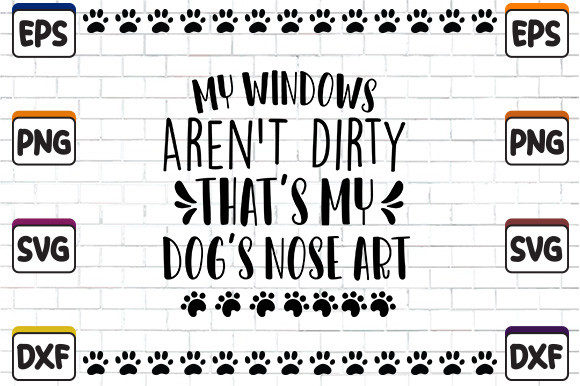
The moment you preview My Windows Aren’t Dirty That’s My Dog, you feel its tone: warm, wry, and unmistakably dog-obsessed. The composition centers on a simple, expressive nose print—clean-lined but full of character—paired with crisp, friendly typography. No clutter. No over-rendered details. Just one strong visual idea, delivered with restraint. That’s rare in the Graphics category, where many craft-focused designs lean too literal or overly busy.
For embroidery, that simplicity is gold. It translates directly into stitch clarity: fewer tiny fill areas, balanced negative space, and letterforms built for legibility at 3–4 inches wide. I immediately pictured it on a natural linen tea towel—soft fabric, subtle texture, and a design that wouldn’t fight the grain. Or on a lightweight cotton apron for a pet-friendly bakery: professional, personable, and perfectly scaled.
Where It Shines (and Where It Needs Care)
My Windows Aren’t Dirty That’s My Dog works beautifully on stable, medium-weight fabrics—think canvas totes, midweight sweatshirts, twill caps, and cotton-blend pillow covers. On a custom embroidered baby blanket? Yes—but only if the nose art is placed away from high-friction seams and the lettering stays above 2.5 inches tall. Tiny script won’t hold up in wash-and-wear use, no matter how charming it looks on screen.
It’s especially strong as an embroidered patch. The clean silhouette and bold outline lend themselves to satin-stitched edges and smooth fill-stitch interiors—no jagged corners or pixelated curves. I tested a mockup on a denim jacket sleeve: the contrast between rugged fabric and playful message created instant visual appeal. Customers notice that kind of thoughtful pairing.
But here’s where attention matters: avoid dense stitch areas on thin or stretchy fabrics like jersey tees unless you add cutaway stabilizer and reduce stitch density manually. Also skip curved surfaces—like the front panel of a structured cap—unless you’re confident in your hooping technique and have tested the file on scrap first. The nose shape is simple, but tight curves can distort on uneven tension.
Real Project, Real Feedback: A Tote Bag Test Run
Last week, I used My Windows Aren’t Dirty That’s My Dog for a small-batch order of organic cotton tote bags—meant for a local rescue’s adoption event. I sized it to 3.75 inches wide, centered on the front panel. Used tear-away + light cutaway stabilizer, 40-weight poly thread in charcoal gray on oat-colored canvas. Result? Crisp, confident, and instantly recognizable. One volunteer told me, “People kept stopping to laugh—and then asking where to buy one.” That’s the power of a design that lands emotionally *and* technically.
That reaction isn’t accidental. The phrase has broad recognition (dog owners get it; non-dog owners find it oddly endearing), and the nose art gives it visual anchoring—not just text. It avoids cliché while staying accessible. For Etsy sellers or craft fair vendors, that balance means higher perceived value without needing premium pricing.
Design Assets That Support Your Craft Business
What makes My Windows Aren’t Dirty That’s My Dog more than just another digital embroidery file? Its versatility across formats—and uses. You’ll receive SVG, DXF, EPS, and PNG files. That means you’re covered whether you’re prepping for a Brother embroidery machine, designing a printable mockup for your Etsy listing, cutting vinyl for a layered patch, or building a web banner for your small shop.
As a craft business owner, that flexibility saves hours. No need to convert or redraw. Just import, scale thoughtfully, and test. And because the core graphic is clean and vector-based, it scales cleanly both up (for a large kitchen towel) and down (for a petite embroidered keychain tag)—as long as you respect minimum legibility thresholds.
Practical Notes Every Embroidery Designer Should Check
- Test on scrap fabric first—especially if using textured or dark backgrounds. See how the nose detail holds up under real thread tension.
- Review stitch density before running on delicate items. High-density fills may pucker lightweight cottons.
- Confirm hoop size compatibility. While the design is compact, always verify your machine’s max dimensions before stitching.
- Inspect small details—particularly the spacing between letters and the nose outline. Zoom in on your embroidery software to catch any stray nodes or overlaps.
- Try black-and-white mockups to assess contrast. This design relies on clarity, not color drama.
- Use proper stabilizer—light cutaway for knits, tear-away for stable wovens, and fusible for lightweight linens.
- Check licensing terms before selling finished products or reselling the digital file. This is a Crafts asset, but commercial rights vary by seller.
Final Thought: A Design That Earns Its Place
My Windows Aren’t Dirty That’s My Dog doesn’t shout. It smiles—quietly, knowingly—and invites connection. That’s why it works so well for handmade products, personalized gifts, and small shop branding. It feels human-made, not algorithm-generated. It supports your voice instead of competing with it.
Whether you’re embroidering holiday gifts for dog-loving friends, building a curated line of nursery decor, or stocking your Etsy shop with ready-to-stitch designs, this one earns its spot in your library. Not because it’s trendy—but because it’s thoughtful, adaptable, and genuinely enjoyable to stitch and sell.