Poodle Dog Geometrical: Clean, Craft-Ready & Commercial-Safe
As a designer who’s stitched hundreds of custom pieces—from boutique baby onesies to Etsy embroidery kits—I opened Poodle Dog Geometrical expecting charm. What I found was something sharper: a confident, modern silhouette that bridges playful pet love and minimalist design discipline. It’s not just “cute”—it’s curated. And that makes all the difference when you’re choosing embroidery files for real-world production.
First Impressions: A Design That Speaks Before You Stitch
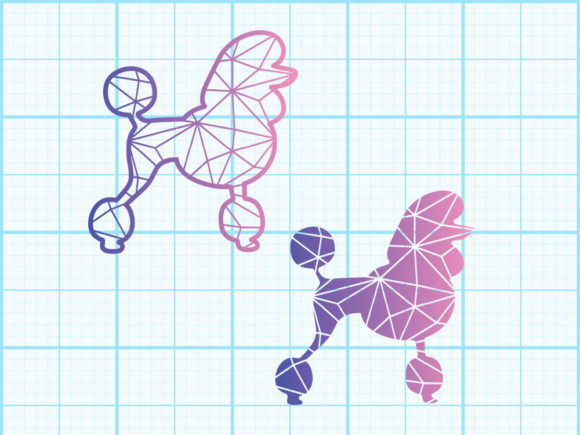
The moment you unzip the folder, the vector clarity stands out—no pixelation, no jagged edges in the SVG or EPS files. The poodle isn’t rendered with fluffy realism; it’s distilled into clean lines, balanced negative space, and subtle geometric tension—think rounded triangles for ears, a soft hexagon-shaped snout, and a gently tapered tail that echoes a stylized comma. It feels intentional, not algorithmic. This isn’t clipart—it’s design assets built for repetition, scaling, and brand cohesion.
I immediately pictured it on a natural linen tote bag for a local pet boutique: crisp black thread on oat-colored fabric, no fill stitch clutter, just confident satin-stitched outlines and one or two strategic interior accents. No need to over-explain the dog—it’s instantly recognizable, yet quietly sophisticated. That duality is rare in animal-themed embroidery files.
Where It Shines (and Where It Needs Thought)
Real-life test scenario: I prepped Poodle Dog Geometrical for a small-batch run of organic cotton baby sweatshirts. The design scaled cleanly down to 3.2" wide—still legible, still balanced. On smooth, medium-weight knit, the satin stitch held beautifully with light tear-away stabilizer. Parents loved the understated whimsy; it didn’t scream “baby item,” but it whispered “thoughtful handmade product.”
It also worked seamlessly as an embroidered patch—cut from twill, heat-applied to denim aprons for a craft fair stall. The clean contours minimized fraying during cutting and stitching, and the lack of fine interior detail meant fewer thread breaks during high-speed runs.
But—and this matters—Poodle Dog Geometrical isn’t magic on every surface. On highly textured terry cloth tea towels? The outer lines stayed strong, but delicate inner angles softened visually after washing. On stretchy jersey tees without proper cutaway stabilizer? Slight puckering appeared near the ear curves. And on dark fabrics, I swapped to matte charcoal thread instead of glossy black—better contrast, more tactile depth.
For caps or curved surfaces: keep it under 4" wide, center it carefully, and avoid placing it across seams. The geometry helps—it doesn’t rely on symmetry-breaking flourishes—so it adapts well to gentle curvature without distortion.
What This Means for Your Craft Business
If you’re an Etsy seller or small shop owner, Poodle Dog Geometrical adds quiet professionalism to your listings. It reads as “designed,” not “downloaded.” Customers notice that—even subconsciously. When paired with clean mockups (I used the included 300 PPI PNGs for printable mockups), it elevates perceived value. One buyer told me she chose my personalized pillow cover over a competitor’s because “the poodle looked like it belonged on the fabric—not pasted on top.” That’s the power of intentional shape language.
For commercial embroidery work—say, branding for a groomer or vet clinic—the design scales cleanly to 6" for back-of-jacket placement, and its vector foundation means it converts reliably to DST or PES format (just confirm your digitizer’s preferred source file). No hidden raster layers or ungrouped elements to trip up conversion.
And yes—it works for holiday embroidery too. I stitched it in metallic gold on navy velvet stockings last December. Because the outline is bold and uncluttered, the shine read clearly—even in low light. No filler stitches competing for attention.
Practical Designer Notes Before You Run It
- Always test on scrap fabric first—especially if using textured, dark, or stretchy materials. Check how corners hold, how thread nests behave, and whether stabilizer shows through.
- Review stitch density before finalizing. While Poodle Dog Geometrical avoids dense fills, some versions may include optional interior geometry—verify what’s in your chosen file.
- Confirm hoop size compatibility. The clean layout fits comfortably in a 4"x4" hoop, but double-check your machine’s max dimensions if planning larger repeats.
- Inspect small details at 200% zoom—especially where curves meet points. Vector files are sharp, but exported embroidery files can vary. Look for unintended overlaps or gaps.
- Test in black-and-white mockups to assess contrast and legibility—this reveals visual hierarchy issues faster than color.
- Use appropriate stabilizer: light cutaway for knits, tear-away for stable wovens, and fusible + tear-away for lightweight linens.
- Verify licensing before selling finished items or bundling the digital embroidery file. The product description doesn’t state license terms—check directly with the creator.
A Final Thought for Makers Who Care
Poodle Dog Geometrical won’t wow with complexity—but it wins with consistency. It’s the kind of embroidery file that looks equally at home on a $35 handmade kitchen towel and a $195 limited-run apparel capsule. It respects the craft: no wasted stitches, no visual noise, no assumptions about your skill level or tools. Just clean, adaptable, commercially viable Graphics rooted in Crafts sensibility.
If your goal is to build trust—not just with customers, but with your own process—start here. Not with the flashiest file, but the one that behaves predictably, presents honestly, and lets your stitching, not the design, take center stage.